01 · the barrier

The data was never trustworthy
In Walmart's blockchain mango pilot, suppliers typed the data in by hand, so it could be false.
Every reading is signed inside a chip, at the sensor.
A rugged, reusable Tag rides on every pallet. It signs each reading inside a tamper-proof chip, keeps recording when the signal drops, and lets anyone check the whole trip with one scan.
No login. Runs in your browser. Readings are simulated; the signing and checking are real.
Built for Smart India Hackathon 2026,
problem statement SIH26232.
T.R.A.C.T. verify
Scanned from the crate label
✓Verified
Every reading is signed by this Tag's chip and none has been changed.
Made at the sensor
Signed in a chip
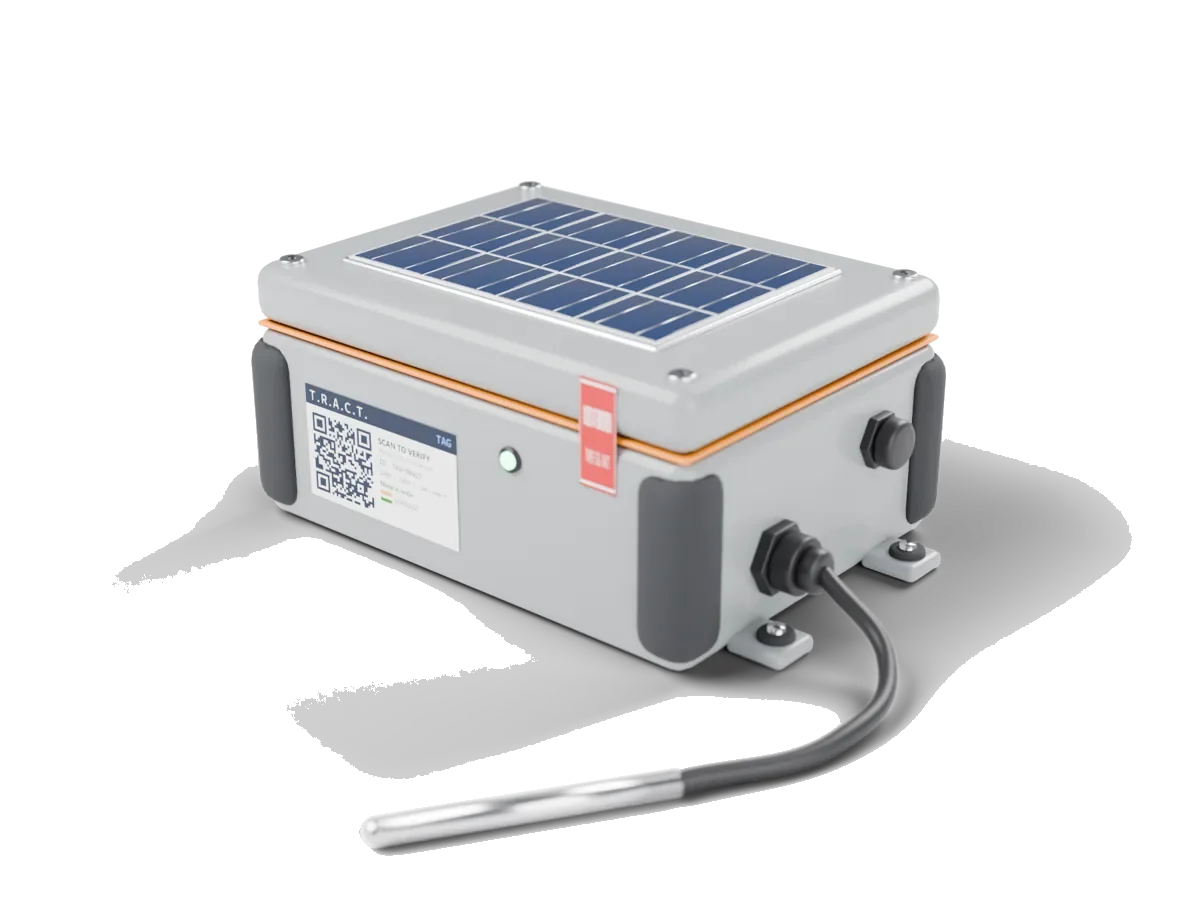
* our own 3D CAD model
What is this?
It watches
Temperature, ripening gas, bumps, and whether the box was opened, every 10 minutes, even with no signal.
It locks each entry
A chip inside signs every reading. Nobody, including us, can change one afterwards without it showing.
Anyone can check
A buyer scans the QR code on the crate and sees a green tick or a red mark, in seconds, on any phone.
The problem
Exporters are asked to prove how food was kept. The trackers that could do it are too expensive to use once and throw away, go blind where there is no signal, and produce records anyone can edit.
₹1.53 lakh crore
of Indian produce is lost after harvest every year.
NABCONS study for the Ministry of Food Processing
₹9,200–12,000
per trip for a tracker that is thrown away after one use.
Elitech and Tive, Indian retail prices
July 2028
US importers must hand over tracking records for mango, papaya and guava within 24 hours.
US FDA food traceability rule
24,680
villages had no 4G, and a steel cold truck blocks the signal anyway.
Department of Telecommunications
Why hasn't this been done?
The parts are cheap and common. So why is there no affordable tracker with records everyone trusts? We looked for the real reasons.
01 · the barrier
In Walmart's blockchain mango pilot, suppliers typed the data in by hand, so it could be false.
Every reading is signed inside a chip, at the sensor.
02 · the barrier

Maersk and IBM's TradeLens shut down in 2023 because too few companies joined.
No sign-up: anyone checks the trip with one QR scan.
03 · the barrier
At ₹9,200 a trip, and costlier to send back than they are worth, single-use trackers are binned.
Cheap enough to own, and reused trip after trip.
04 · the barrier
24,680 villages had no 4G, and steel trucks and containers block radio.
It stores everything offline, and syncs when signal returns.
05 · the barrier
A true ethylene cell costs about ₹13,000. Cheap ones can only guess.
One exact cell per truck, and a gas sensor on every Tag.
So we built
A Tag for every pallet and a Hub for every truck.
See how it fits together →How it works
Three things happen to every reading. None of them needs a login, an app or trust in us.
01 · SENSE
Every 10 minutes the Tag reads the air, a steel probe pushed into the fruit, the ripening gas, and every knock. If someone chills only the Tag, the air and the fruit stop agreeing, and that mismatch is an alarm.
Two temperatures, on purpose
02 · SIGN
A secure chip signs each reading at the moment it is taken and links it to the one before. Its key can never be read out, so a copy can't fake readings and an edit can't hide.
Tamper-evident by design
03 · CHECK
Whoever scans the crate's QR code gets a page that redoes the maths in their own browser. If a single reading was changed, deleted or copied, it turns red at exactly that block.
No server to trust
The hardware
Two devices. The Tag rides on every pallet. The Hub rides on every truck, where its roof antennas can see the sky and the truck's power keeps it running.
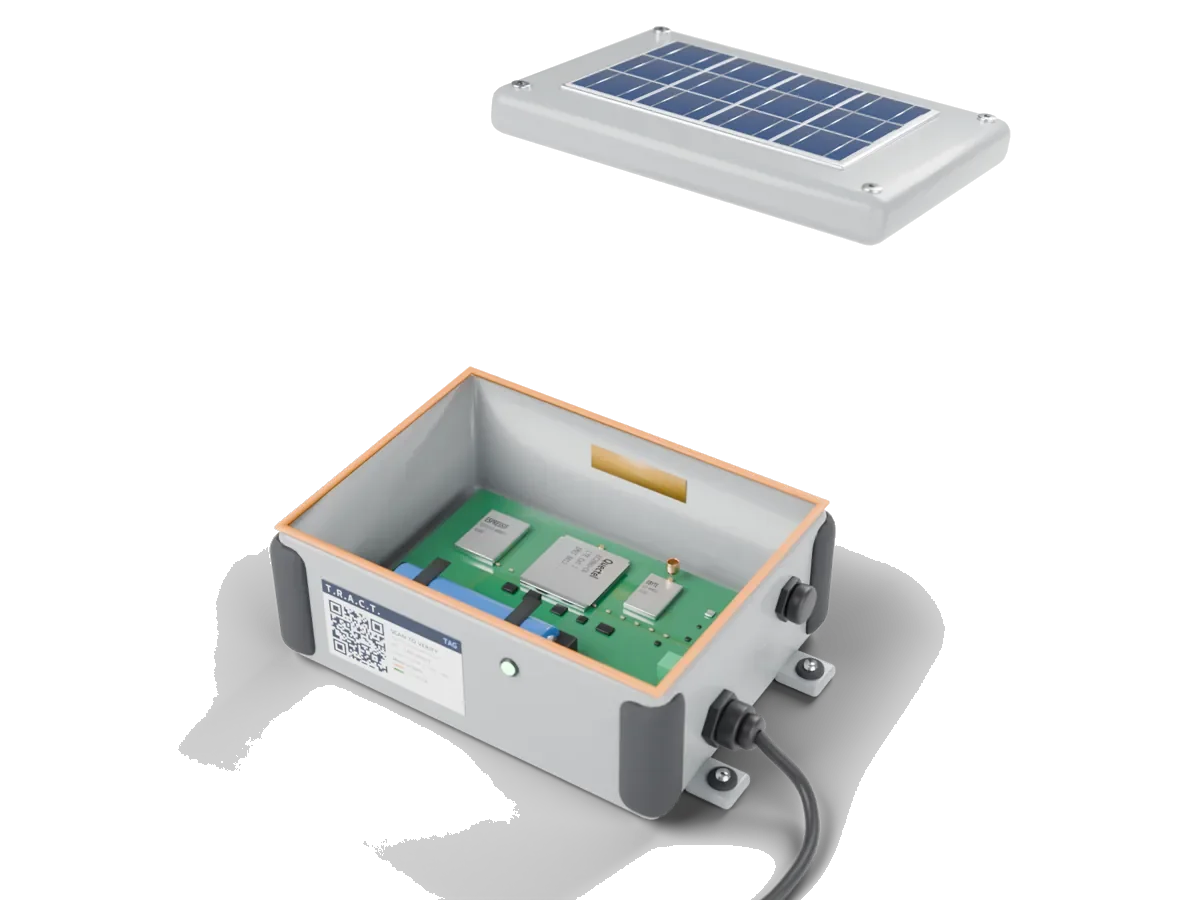
The Tag · one per pallet
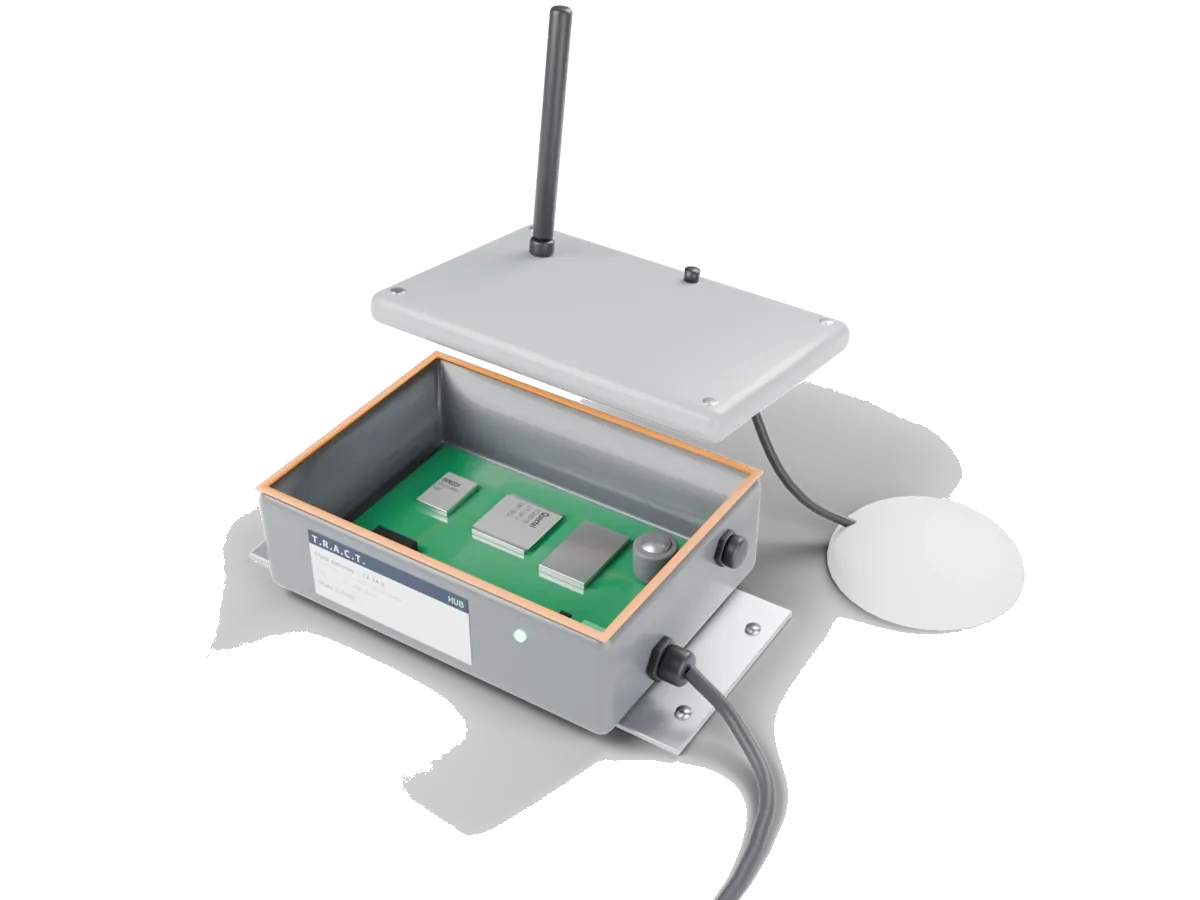
The Hub · one per truck
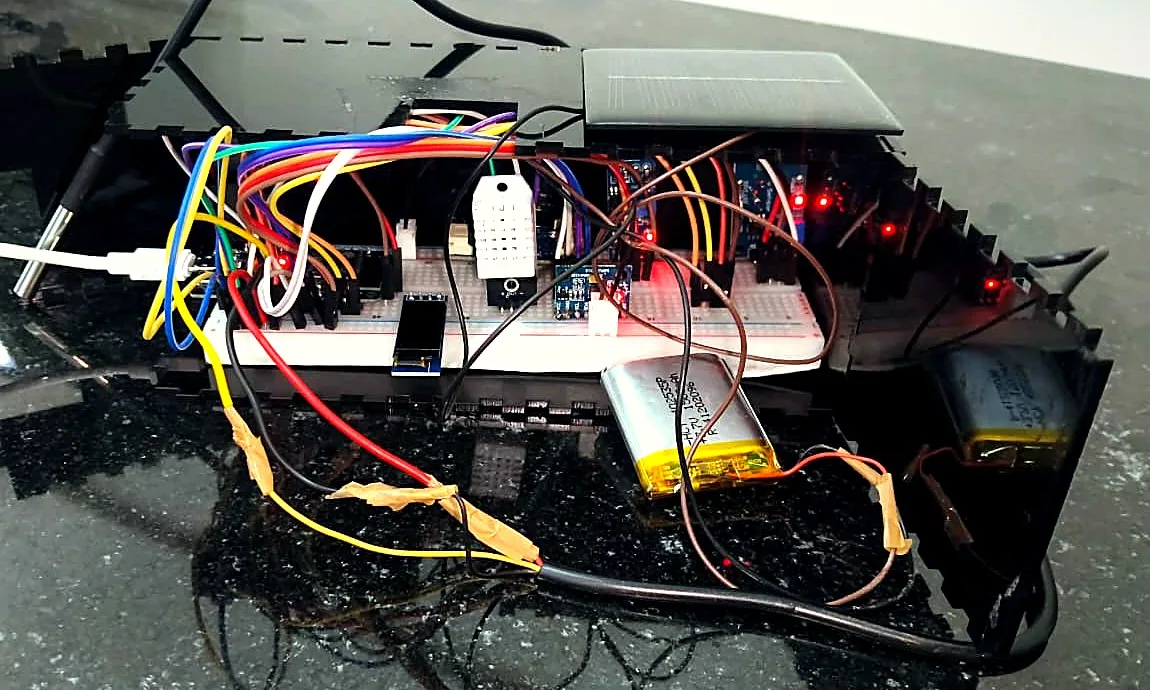
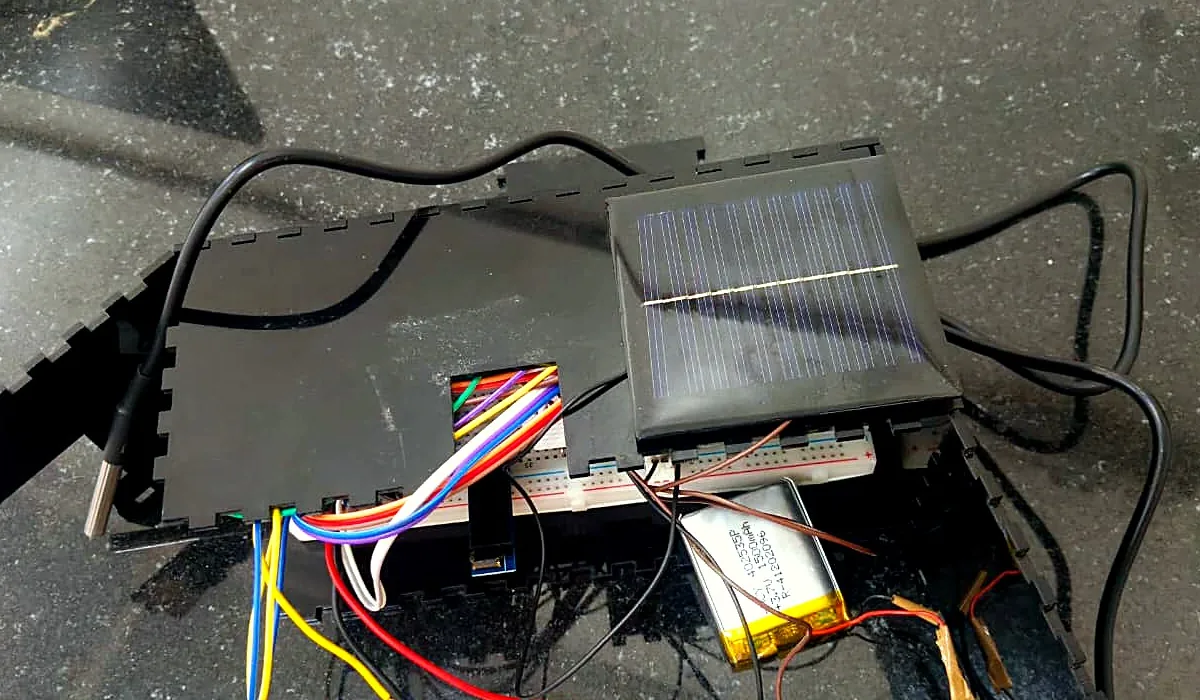
Real prototype
Probe in, sensors reading, OLED showing live values, battery charging from the solar panel, inside a laser-cut case. These are our own photos.
One crate's journey
Follow a crate of Alphonso mangoes from Ratnagiri to Dubai, and who gains at every step.
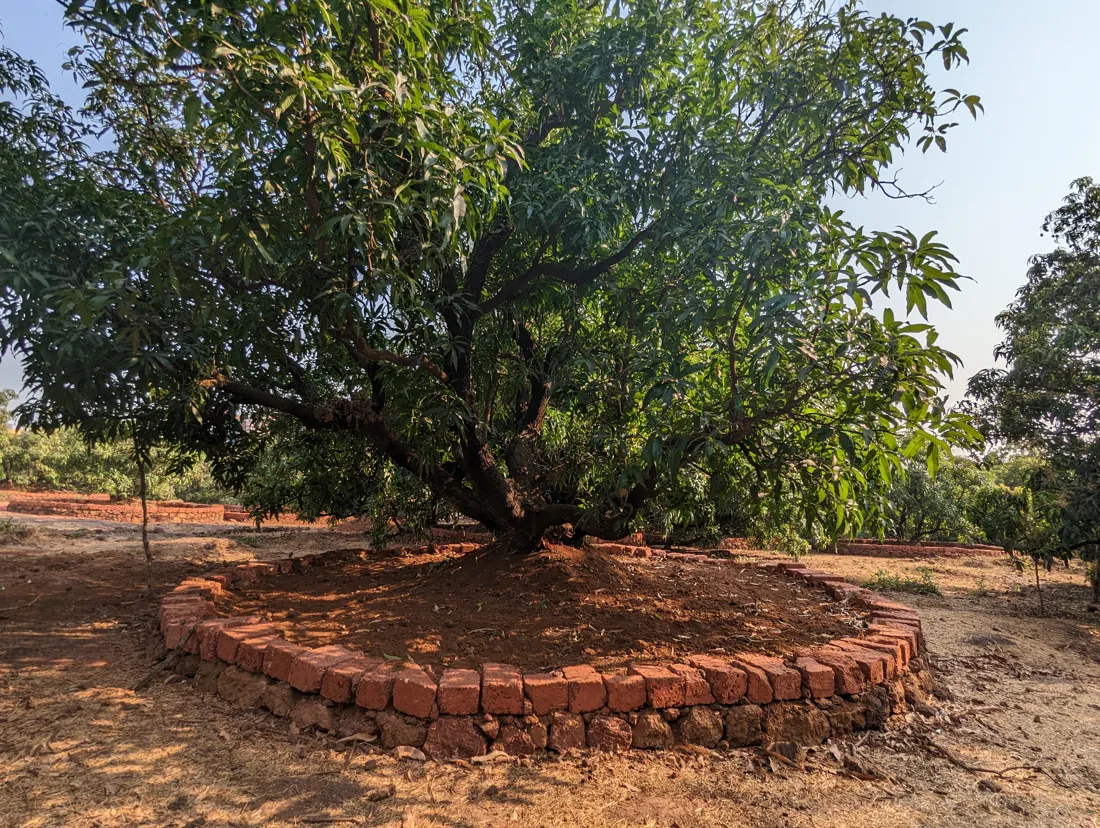 1
1Tag on the pallet, probe in the fruit.
Farmer: proof the crop left in perfect shape
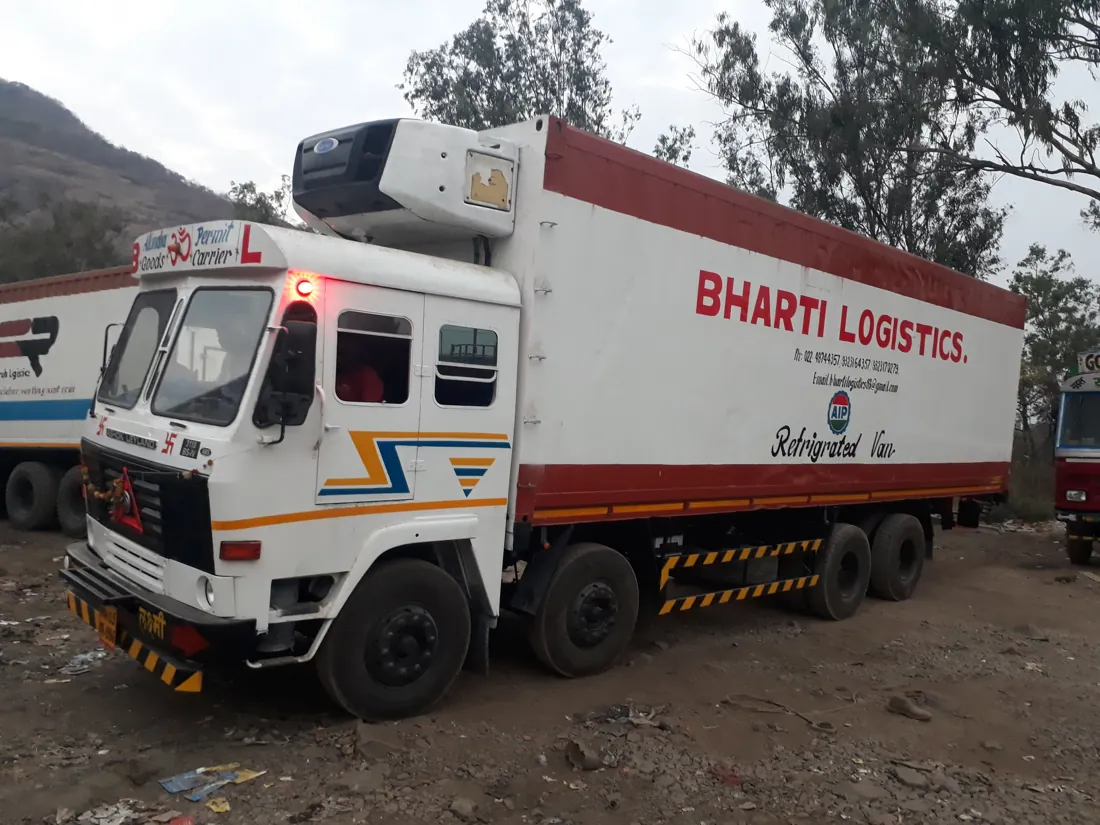 2
2Readings signed and stored; the Hub relays.
Transporter: proof the truck stayed cold
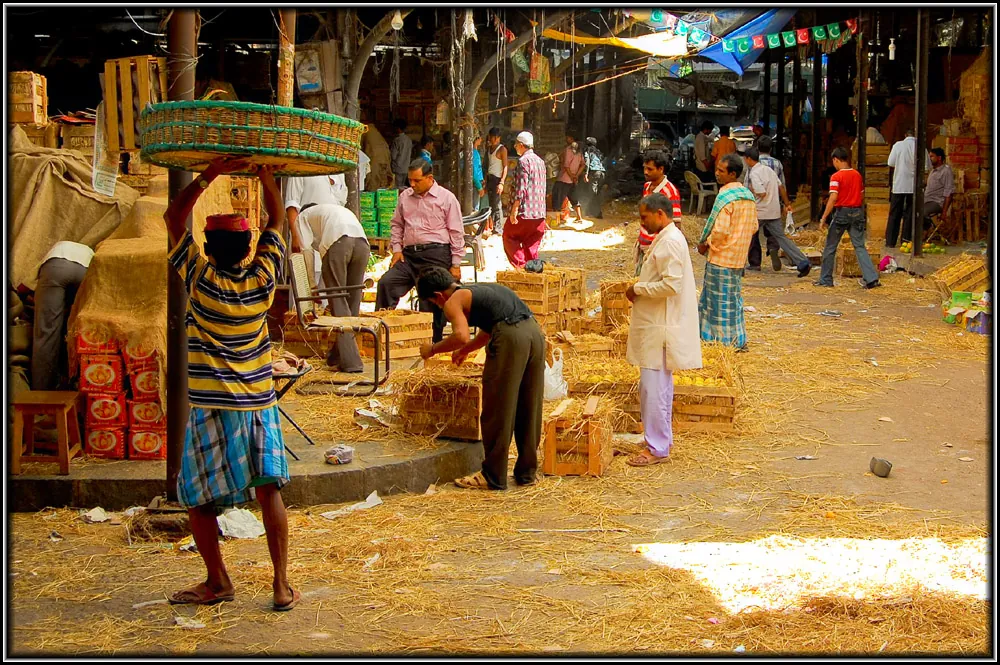 3
3Box opened: a signed tamper alert.
Exporter: knows now, not weeks later
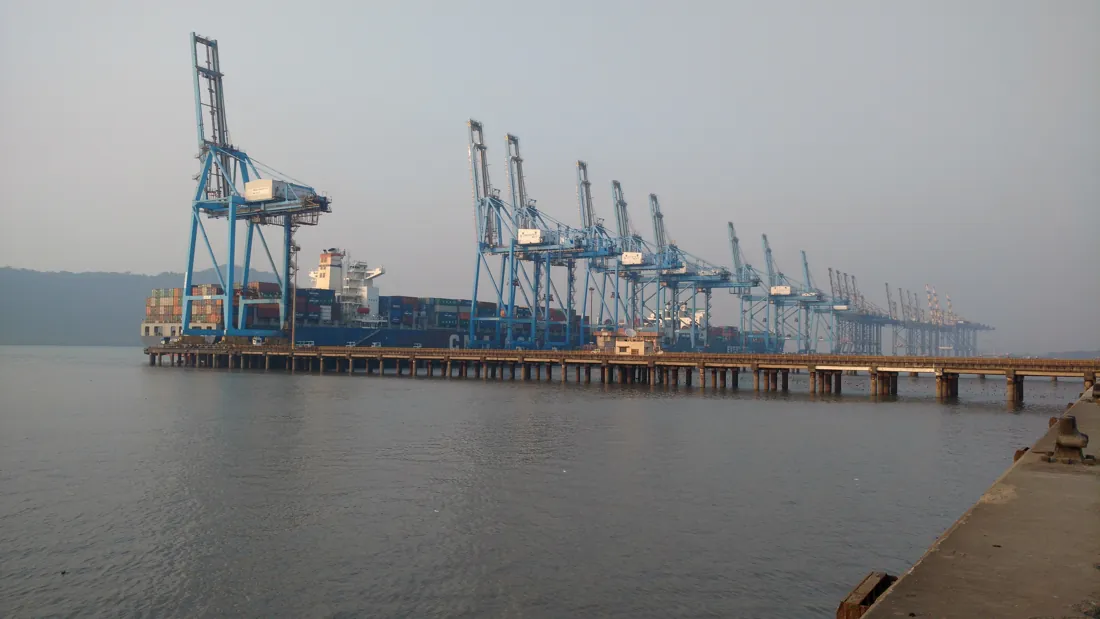 4
4Back in signal: the record syncs itself.
APEDA: export papers ready before loading
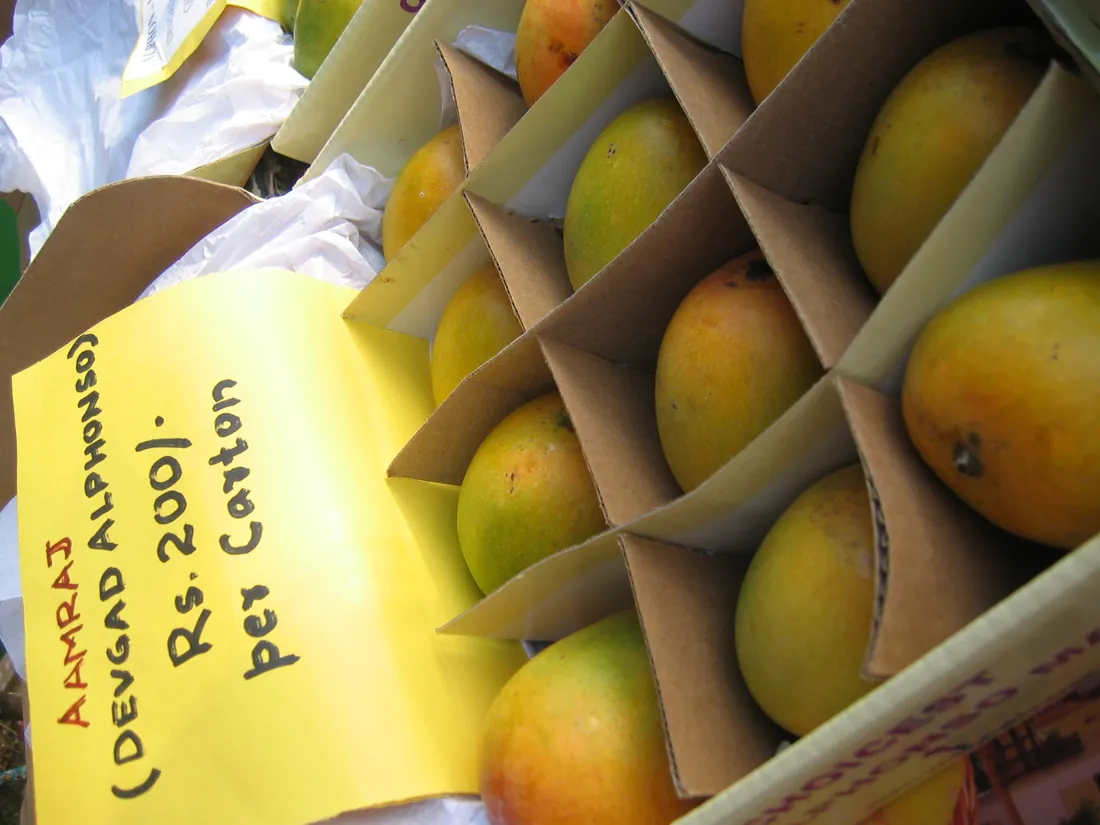 5
5Ethylene rising: sell this crate first.
Planet: less food thrown away
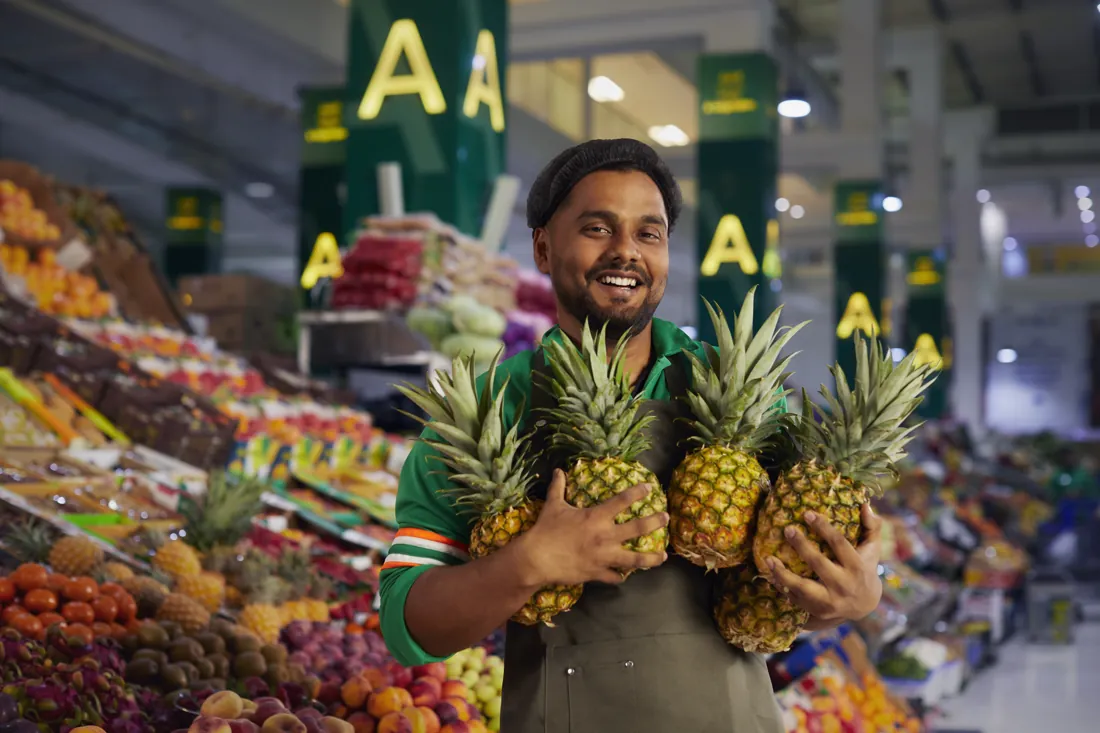 6
6Scans the QR: a green tick and full proof.
Everyone: no disputes, a fair price
Numbers we can defend
Conservative on purpose: cold, dark, and the battery losing charge by itself. Every input is on the Economics page, ready to change.
Cost per pallet
₹9,200 → ₹350
per trip, once the Tag has paid for itself
₹8.5k for the Tag once, a tenth of a ₹18k Hub, about ₹350 a trip in upkeep, and a battery kit every 10 trips. Break-even against a single-use tracker: trip 2.
Battery, worst case
2 wk · 4 mo
on its own 4G · through the Hub
In daily sun the solar lid covers what the Tag uses. Inside a dark truck it runs on the battery alone, and we count the cell's self-discharge and the cold.
Built rugged
IP67 · IK08
dust-tight, 1 m of water, impact-rated
Gasket, breather vent, rubber bumpers and mounts, stainless screws, a conformal-coated board. A design target we will torture-test before we sell one.
Impact
Farmers get paid for a load kept well. Exporters meet the rules. Less food, and fewer trackers, end up in the bin.
Social
Economic
Environment


Run a trip, tamper with the record, and watch the maths catch you. Two minutes with the guided tour, or open the dashboard and explore.